
iPhone · iPad · Apple Watch
Pottery glaze log for every layer you fire
Photograph the piece, write the glaze layers in order, note the firing. Next time, open the piece and see exactly what you did.

Free to download · No account · Notes stay on your device
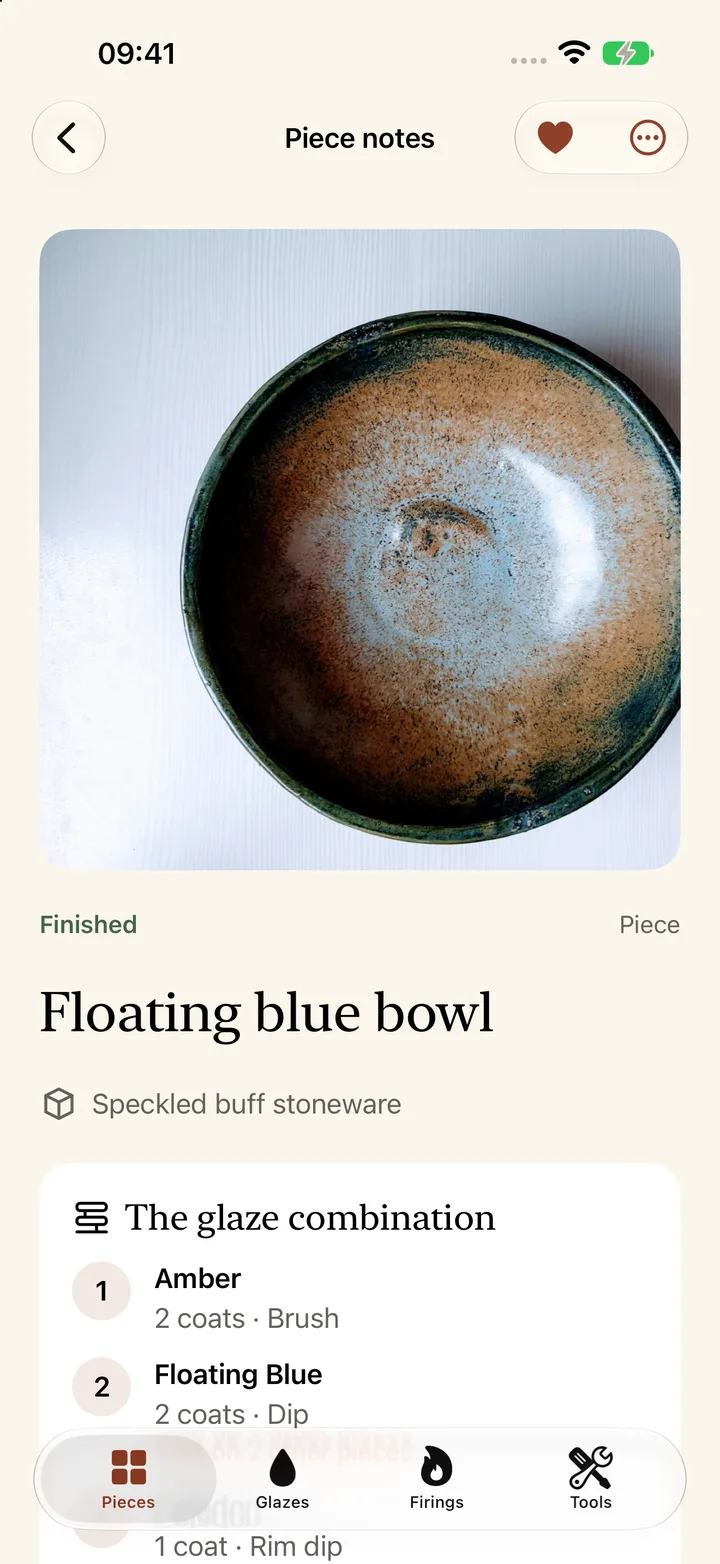
From the piece to the glaze to the firing result.
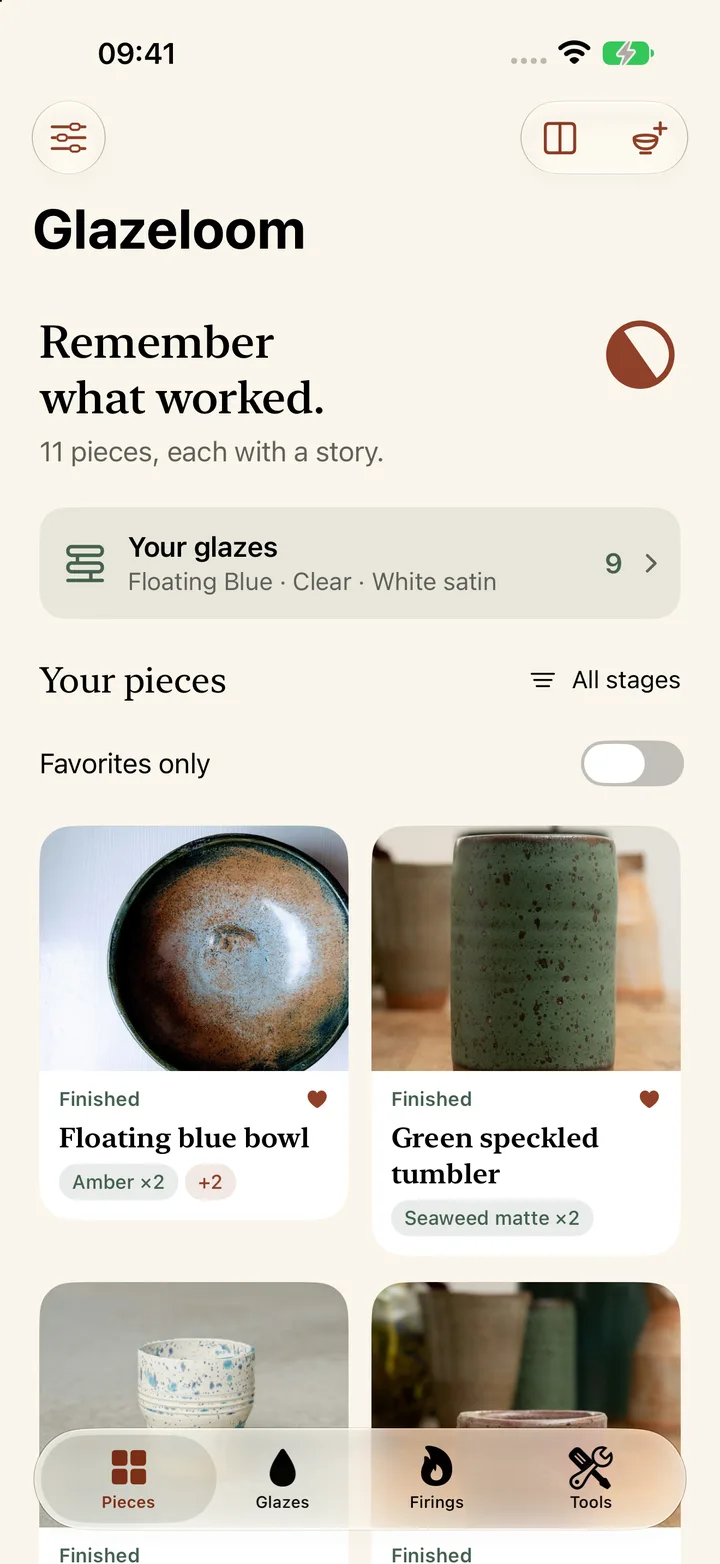
Photograph the piece
Add the clay body, a photo and the stage it is in.
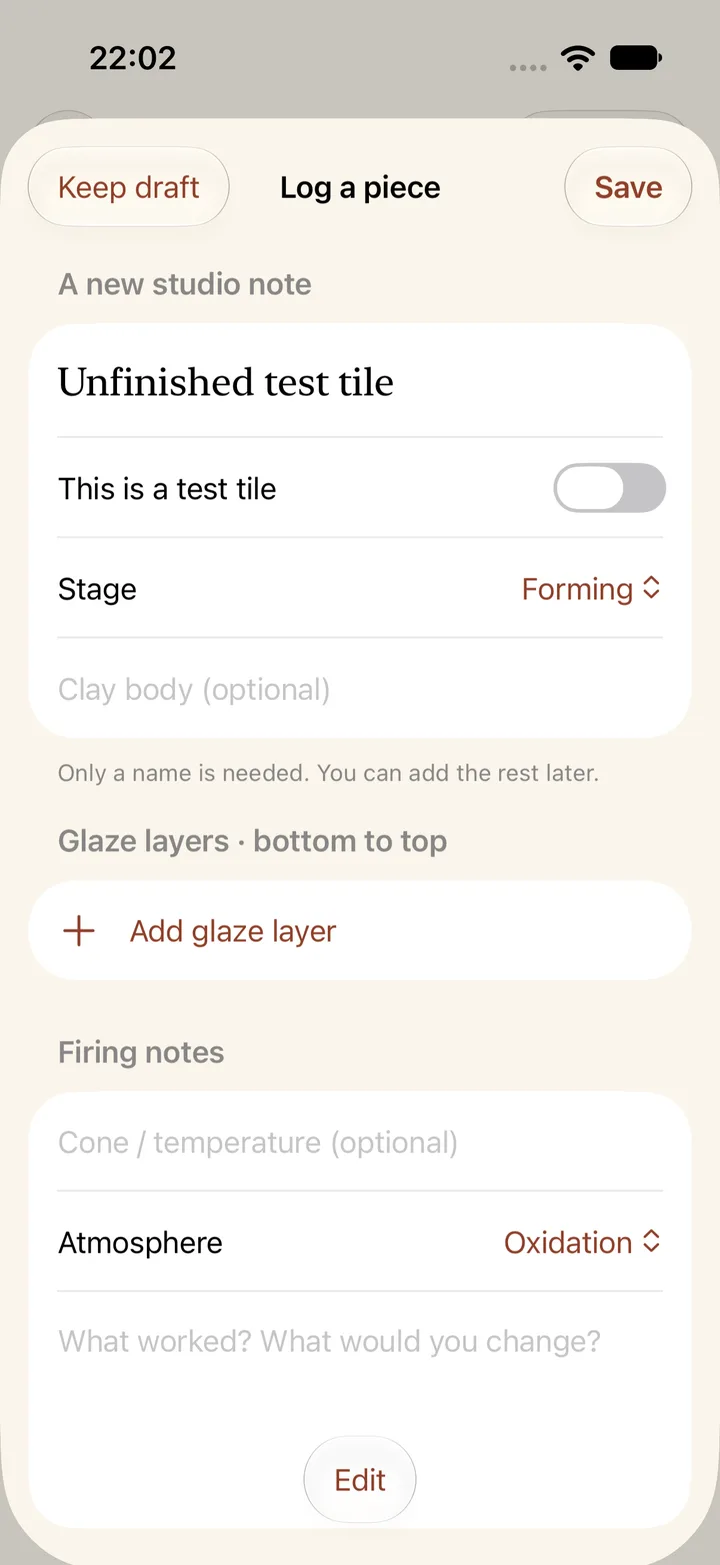
Write the layers in order
Glaze, coats and method from the bottom layer up, then cone and atmosphere.
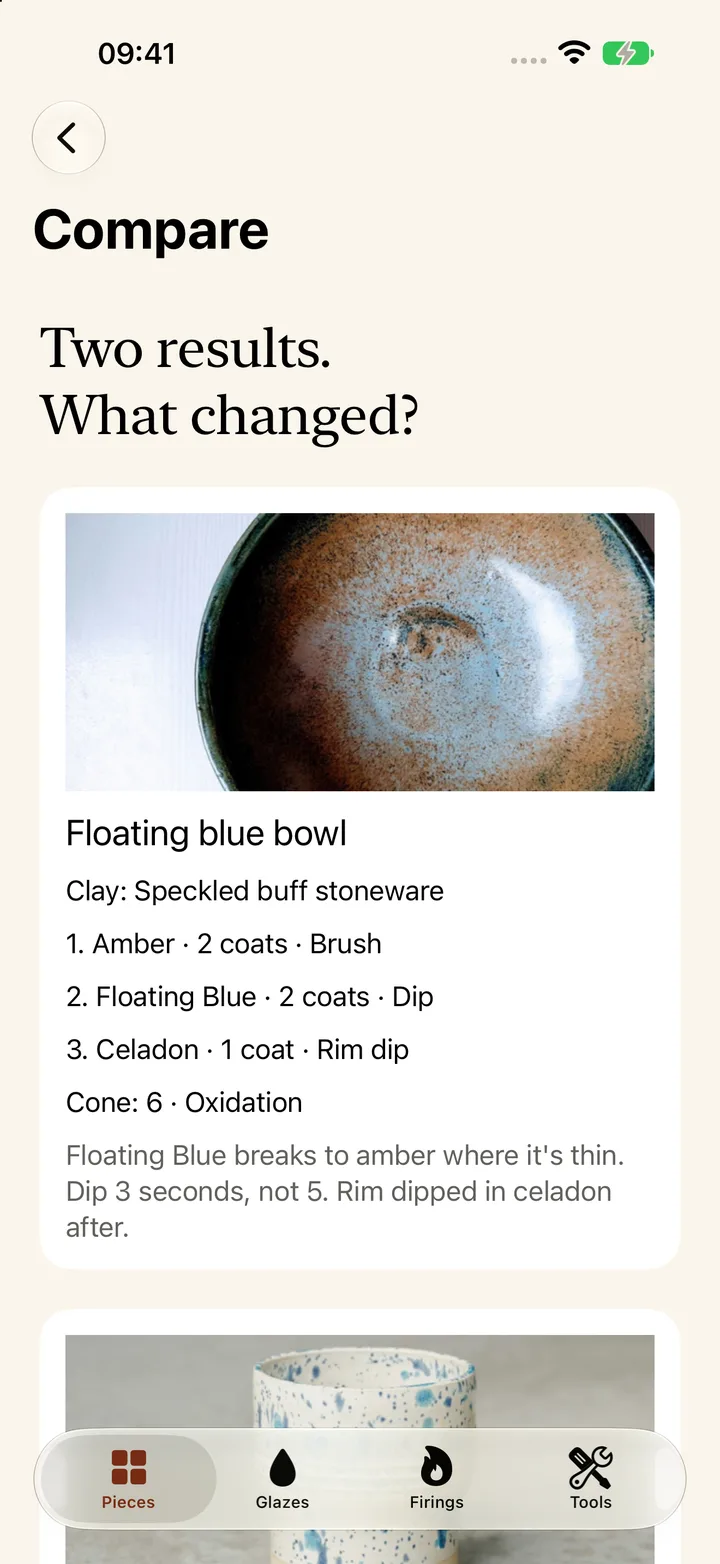
Compare what came out
Put two results side by side and see what changed between firings.
Your notebook is private by default.
- accounts to create
- 0
- advertising or analytics SDKs
- 0
- file holds a full backup
- 1
Export a complete backup with photos and drafts, or choose a Files folder for optional automatic backups. Restore adds missing pieces and keeps matching local records. Live cross-device notebook sync is not enabled.
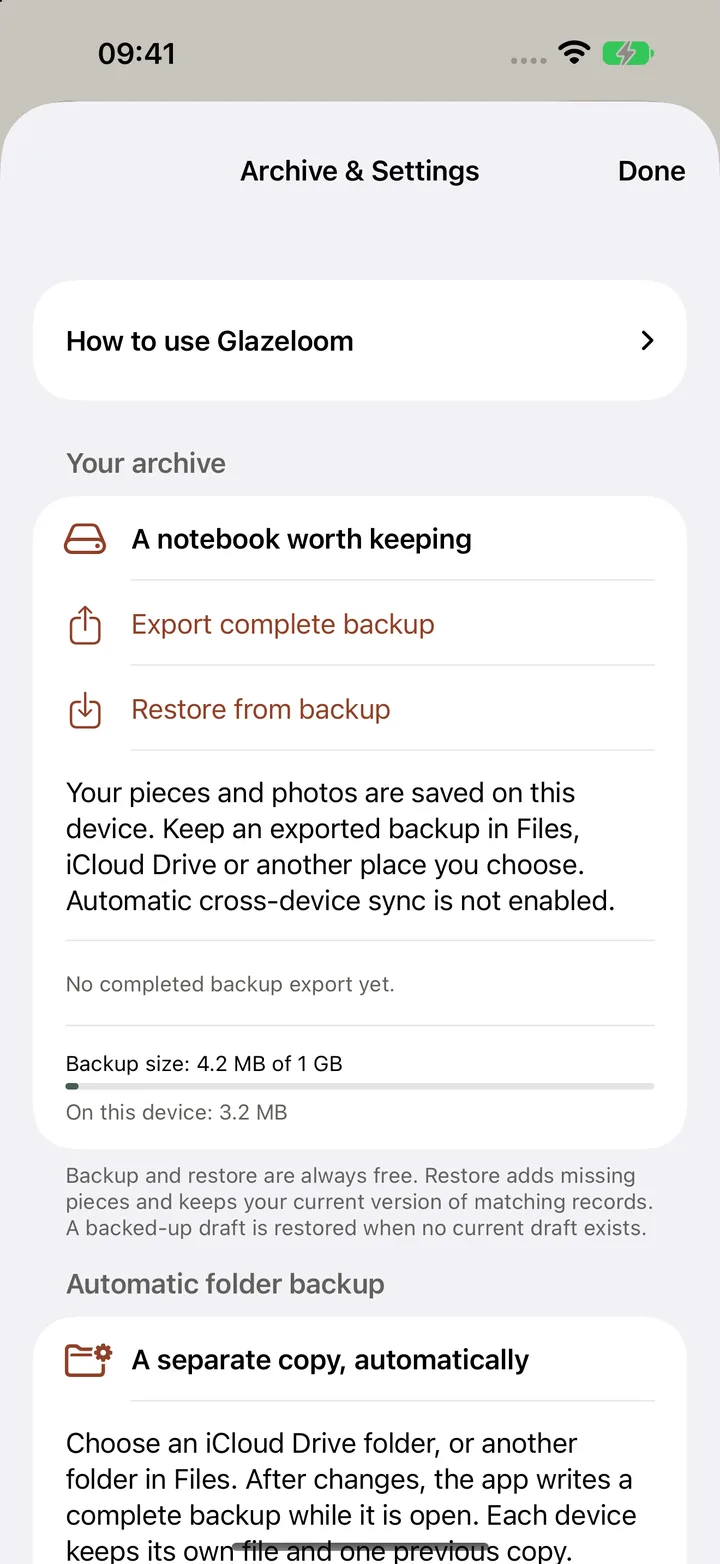
On iPhone, iPad and Apple Watch.
- Glazeloom for iPhone
- Log a piece at the bench and find last time’s glaze.
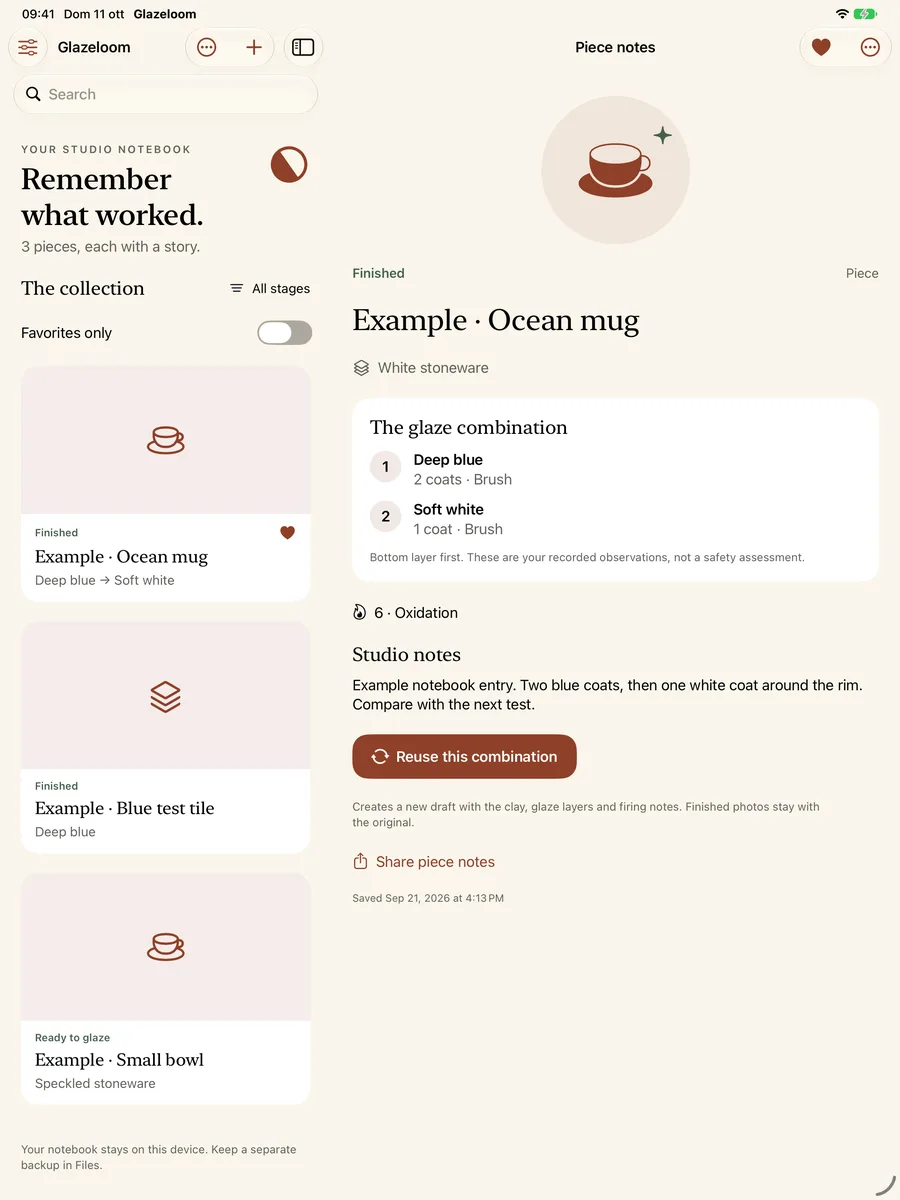
- Glazeloom for iPad
- Collection and piece details side by side.
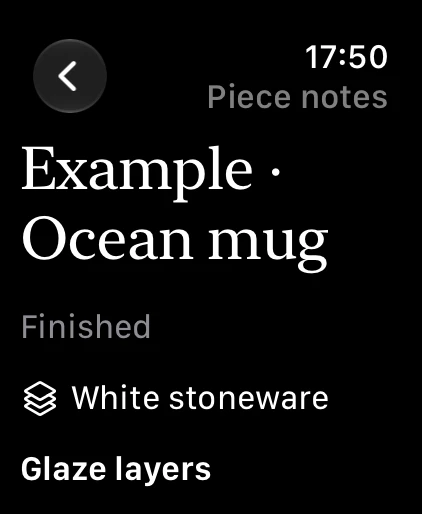
- Glazeloom for Apple Watch
- Recent piece notes on your wrist, read-only and opt-in.
Pottery notebook guides
Glaze test tile log with a printable record
Print a blank glaze test tile record. Keep the clay, layer order, application, firing reference and result notes connected to the same tile.
Back up a pottery notebook before changing iPhone
Protect the notes behind your finished pieces. Make a complete Glazeloom backup, check its destination and understand what restoring will keep.
Pottery cone chart: Orton cone temperatures in °C and °F
Orton pyrometric cone temperatures from cone 022 to 14 in Celsius and Fahrenheit, plus how to read a cone chart and why the number is heatwork, not heat.
Cone 04 vs cone 6: which is hotter and when to use each
Cone 6 is about 160 °C hotter than cone 04. See the Orton temperatures side by side and what each cone means for clay, glaze and your firing notes.
Bisque firing cone: cone 06 or cone 04 before glazing?
Most bisque firings use cone 06 or 04. Learn why bisque stays cooler than the glaze firing, how to choose, and what to log for repeatable results.
Pottery journal template: what to write for every piece and firing
A free pottery journal template: the clay, glaze layer, firing and result fields worth writing down so you can repeat a good piece or avoid a bad one.
Glaze layering combinations: how to test and record them
Test glaze layering combinations on tiles, change one variable at a time, and record layer order, coats and firing so a good overlap can be repeated.
Glaze recipe percentages and unity formula, explained
What glaze recipe percentages mean, what the unity molecular formula (UMF) shows, and how to log recipes and results without a calculator.
Glaze crazing: causes, fixes and what to record
Crazing is a web of fine cracks caused by a glaze that shrinks more than the clay. Learn the causes, what to test first and which notes find the pattern.
Glaze crawling, pinholing and blisters: causes and fixes
Why a glaze pulls into islands, pocks with pinholes or blisters, what to change first, and which kiln notes help you spot the cause next time.
Cone 5 vs cone 6: temperature gap and how to choose
Cone 6 is about 36 °C (65 °F) hotter than cone 5. See what changes for clay, glazes and kiln wear, and how to log which one you fired.
Clay shrinkage rate: how to measure it and scale your pots
Measure your clay’s shrinkage with a test bar, work out the percentage from wet to fired, and size a piece so it comes out the finished size you planned.
Kiln firing log: what to record for every firing
What to write in a kiln firing log: load, schedule, cone, atmosphere, results and kiln quirks, so a good firing can be repeated and a bad one explained.